Advantages Disadvantages of All or 4 Wheel Drive

,

The differential is found on all modern cars and trucks, and also in many all-wheel-drive (full-time four-wheel-drive) vehicles. These all-wheel-drive vehicles need a differential between each set of drive wheels, and they need one between the front and the back wheels as well, because the front wheels travel a different distance through a turn than the rear wheels.

Part-time four-wheel-drive systems dont have a differential between the front and rear wheels; instead, they are locked together so that the front and rear wheels have to turn at the same average speed. This is why these vehicles are hard to turn on concrete when the four-wheel-drive system is engaged.


The Advantages & Disadvantages of All Wheel Drive
All Wheel Drive (or AWD) is a system in which all four wheels of a car operate simultaneously to improve traction and handling. While it is possible for a car to have continuous AWD capabilities, it is far more common for one pair of wheels to engage only when sensors detect that the other pair has begun to slip. There are both advantages and disadvantages to AWD systems

1.    Traction-

In intermittent AWD systems, the rear wheels engage when sensors detect slippage from the front wheels. Under these circumstances, the vehicle effectively detects and compensates for dangerous driving conditions such as standing water, snow, ice or gravel that could otherwise compromise control of the vehicle. By engaging the second set of wheels, the vehicle experiences two additional points of contact on the surface of the road, allowing greater likelihood that its tires will grip the surface and allow the driver to retain control. The additional weight of AWD systems also encourages more grip on the road and the added points of contact distribute the vehicles weight more evenly over points of propulsion.

2.    Fuel Efficiency-

The primary disadvantage of an AWD vehicle is its cost. The drive train and related equipment necessary to provide both continuous and intermittent AWD is complex and expensive, often requiring sensors and computers that are not necessary on two- or four-wheel-drive vehicles. This cost increases the initial market value of the vehicle and can also affect the cost of repairs. In addition to these costs, AWD systems require more fuel to power the additional wheels and are less fuel efficient than comparable two-wheel-drive vehicles.

3.    Braking Distance and Collision Avoidance-

While the weight of AWD vehicles improves their handling, it also increases the distance they require to stop. In a scenario where the vehicle must make a sudden stop and cannot swerve or turn, a collision becomes more likely than with a lighter car. Under similar circumstance, but ones in which an accident can be avoided by turning, AWD vehicles offer superior collision avoidance than similar vehicles with less effective handling and turning capabilities.


Read more →

Working of a Car

,

When a driver turns a key in the ignition:
  • The car battery powers up sending
  • Power to the starter motor, which
  • Turns the crankshaft, which
  • Gets the pistons moving
  • With the pistons moving the engine fires up and ticks over
  • A fan draws air into the engine via an air filter
  • The air filter removes dirt and grit from the air
  • The cleaned air is drawn into a chamber where fuel (petrol or diesel) is added
  • This fuel-air mix (a vaporised gas) is stored in the chamber
  • The driver presses the accelerator pedal
  • The throttle valve is opened
  • The gas-air mix passes through an intake manifold and is distributed, through intake valves, into the cylinders. The camshaft controls the opening and closing of the valves.
  • The distributor makes the spark plugs spark, which ignites the fuel-air mix. The resulting explosion forces a piston to move down which in turn causes the crankshaft to rotate.
Read more →

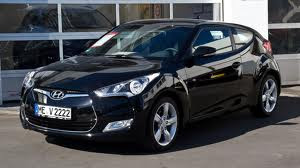
Hyundai Veloster User Manual

,
First and foremost this is an economy car. It should be rated for what it is, not what someone might want it to be. Price wise, place it toward the high end of econoboxes. Where this car excels is in the amount of features available in this this class. External appearance suggests a car costing much more. Internal appearance is very well done. There is lots of plastic, but again, this is an economy car. I have averaged 36.5 mpg over 8000 miles with a worst tank at 35 mpg. I have the Tech package and thoroughly enjoy the features. If I lost this car I wouldnt even consider any other as a replacement. I have the 6 speed manual transmission and find it enjoyable to shift.

Download Hyundai Veloster User Manual PDF
Picture By commons.wikimedia.org
The 2013 Veloster is a 3-door, 4-passenger family coupe, available in 3 trims, ranging from the Base to the Turbo.

Upon introduction, the Base is equipped with a standard 1.6-liter, I4, 138-horsepower engine that achieves 27-mpg in the city and 37-mpg on the highway. A 6-speed manual transmission with overdrive is standard. The Turbo is equipped with a standard 1.6-liter, I4, 201-horsepower, turbo engine that achieves 24-mpg in the city and 35-mpg on the highway. A 6-speed manual transmission with overdrive is standard, and a 6-speed automatic transmission with overdrive is optional.

Get free Hyundai Veloster user manual here:
If you are looking for a great looking economical car, the Veloster is an excellent choice. In over forty five years of owning cars I can truthfully say this one is the most enjoyable.
Read more →

Comparison between Manual and Automatic Transmission

,
Both the automatic transmission and a manual transmission accomplish exactly the same thing, but they do it in totally different way.

Advantages of manual transmission over automatic transmission-

1.    It is easier to build a strong manual transmission than an automatic one. This is because a manual system has one clutch to operate, whereas an automatic system has a number of clutch packs that function in harmony with each other.
2.     Manual transmissions normally do not require active cooling, because not much power is dissipated as heat through the transmission.
3.     Manual gearshifts are more fuel efficient as compared to their automatic counterpart. Torque convertor used to engage and disengage automatic gears may lose power and reduce acceleration as well as fuel economy.
4.     Manual transmissions generally require less maintenance than automatic transmissions. An automatic transmission is made up of several components and a breakdown of even a single component can stall the car completely.

Advantages of automatic transmission over manual transmission-

1.      The manual transmission locks and unlocks different sets of gears to the output shaft to achieve the various gear ratios, while in an automatic transmission; the same set of gears produces all of the different gear ratios. The planetary gearset is the device that makes this possible in an automatic transmission.
2.      Automatic cars are easier to use, especially for the inexperienced car driver. Manual system requires better driving skills, whereas with an automatic, the clever system does it all on its own. This holds a greater advantage for new and inexperienced drivers and also helps during congested traffic situations where it becomes difficult to change gears every second.
3.    Automatic transmission requires less attention and concentration from the driver because the automatic gears start functioning as soon as the system feels the need of a gear change. For car with manual gear shifts, the driver has to be more alert while driving and better coordinated.
4.     There is no clutch pedal and gear shift in an automatic transmission car. Once you put the transmission into drive, everything else is automatic.
5.   Automatic cars have better ability to control traction when approaching steep hills or engine braking during descents. Manual gears are difficult to operate on steep climbs.
Read more →

2013 Chevrolet Silverado Specs and Guide Manual

,
Chevrolet unveiled the all-new 2014 Silverado 1500 full-size pickup. New from hood to hitch, Chevy Silverado is engineered to be the strongest, smartest, and most capable Silverado ever.

The new Silverado builds on Chevrolets 95 years of truck heritage, while raising the bar for full-size pickups. Among the many updates for 2014 are a new trio of powerful, efficient EcoTec3 engines; a stronger, quieter, more comfortable cab; revised steering, suspension and brakes; ingenious solutions for managing cargo in the bed and true truck capability for towing and hauling.

The engine family includes a new 4.3L V-6 that will have ample torque to power a crew cab pickup and tow a substantial trailer, as well as a new 5.3L V-8 designed for more power, more torque and better efficiency than the current version, which is currently the V-8 fuel economy leader. A new 6.2L V-8 is engineered to be the most capable engine in any light-duty pickup.

You can get special something about 2013 Chevrolet Silverado pdf. Its 2013 Chevrolet Silverado Specs and Guide Manual With simple technique.
Read more →

Fluid Coupling

,

It is a device for transmitting rotation between shafts by means of the acceleration and deceleration of a hydraulic fluid (such as oil). Also known as hydraulic coupling. Structurally, a fluid coupling consists of an impeller on the input or driving shaft and a runner on the output or driven shaft. The two contain the fluid. Impeller and runner are bladed rotors, the impeller acting as a pump and the runner reacting as a turbine. Basically, the impeller accelerates the fluid from near its axis, at which the tangential component of absolute velocity is low, to near its periphery, at which the tangential component of absolute velocity is high. This increase in velocity represents an increase in kinetic energy. The fluid mass emerges at high velocity from the impeller, impinges on the runner blades, gives up its energy, and leaves the runner at low velocity.


How it Works

Hydraulic fluid couplings transfer rotational force from a transmitting axis to a receiving axis. The coupling consists of two toroids -- doughnut-shaped objects -- in a sealed container of hydraulic fluid. One toroid is attached to the driving shaft and spins with the rotational force. The spinning toroid moves the hydraulic fluid around the receiving toroid. The movement of the fluid turns the receiving toroid and thus turns the connected shaft.

Efficiency

Although fluid couplings use hydraulic fluid within their construction, the mechanism loses a portion of its force to friction and results in the creation of heat. No fluid coupling can run at 100 percent efficiency. Excessive heat production from poorly maintained couplings can result in damage to the coupling and surrounding systems.


A fluid coupling is a hydrodynamic device used to transmit rotating mechanical power. It has been used in automobile transmissions as an alternative to a mechanical clutch. It also has widespread application in marine and industrial machine drives, where variable speed operation and/or controlled start-up without shock loading of the power transmission system is essential.

Read more →

2010 Honda Accord Sedan propietarios de manual

,
O que la jerarquía adecuada en el diseño del automóvil es el primer hombre, la segunda máquina. O que la tecnología innovadora del motor puede resultar en la potencia y la eficiencia. Estos son algunos de los principios que usted encontrará en el trabajo en todas las Honda. Y, en particular en el Acuerdo de 2010. No es sólo un coche, que es una declaración de la misión. Algo más que acero, el aluminio, el caucho y el vidrio, el Honda Accord es una colección de ideas. Al igual que la creencia de que ser responsable y la diversión no son mutuamente excluyentes.


Descarga: 2010 Honda Accord Sedan manual
Read more →